


While the basic sod installation process remains the same, laying new sod on a slope or hill requires a few extra steps regarding sod orientation, seam patterns, and anchoring. You've come to the right place to learn how to lay sod on a slope to prevent excess water runoff and to prevent new sod from separating at the seams, sliding downhill, washing away in rain or irrigation, or developing erosion problems.
Here's how to lay sod on a slope or hill the right way to help your new grass establish strong roots for long-term success.
Laying Sod on Slopes or Hills
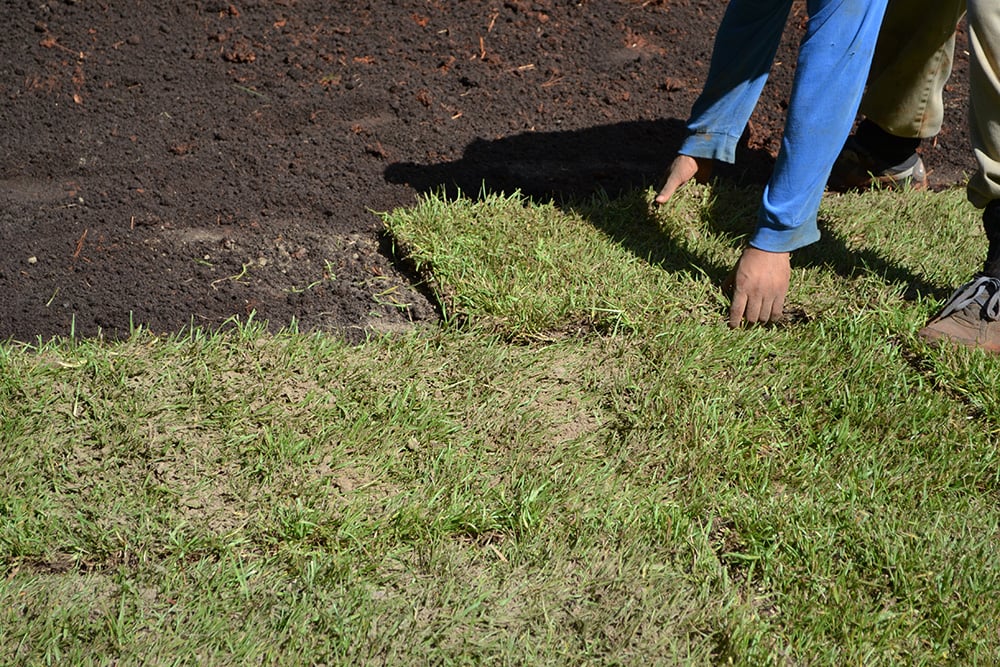
When laying sod on a slope, start by following the same details we outline in our article "How to Lay Sod," such as beginning by installing sod along the straightest edge (like a driveway), cutting clean edges, and avoiding gaps and overlaps, while being sure to tightly push all edges together.
When you are laying sod on a slope, just keep these three extra pointers in mind:
-
Use Sod Staples: Use sod staples (long U-shaped pins) to tack down the new sod and help it stay in place until it roots in the spring. Sod staples are especially helpful when laying sod on slopes and preventing slippage or folding.
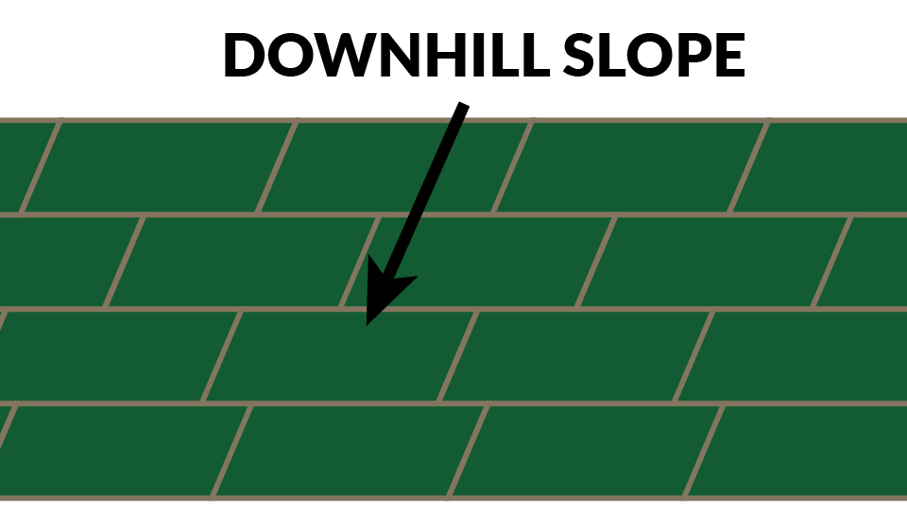
- Stagger Like Bricks: Staggering the end seams of sod rolls and pieces in a brick-like pattern looks tidy and professional. Besides the pleasing layout, a brick pattern prevents long-running seams in your sod. If there is a seam all the way down, the water will follow the seam and run all the way down and away from your lawn.
-
Orient in a Horizontal Direction: Pay attention to the direction you lay the sod rolls or pieces:
-
Lay the rolls of sod horizontally or perpendicular to the slope to prevent your sod from being washed away by heavy rainfall.
-
Do not lay sod vertically or the long way down a slope because it's more prone to being washed away at that angle.
-
After Laying Sod on a Slope
Sod Rolling: Once your sod has been installed on the slope, carefully roll the sod with a sod roller to help new sod roots make contact with the soil. This rolling process removes air pockets, so your new sod takes root faster. Rolling also helps level the lawn by smoothing out bumps and depressions.
Since you're working on a hill or incline, rent a sod roller that you fill with water (the water provides the necessary weight to roll the lawn) and fill only to the capacity that you can safely handle on the slope. Water rollers are great because they are light to transport, and their weight is easily adjusted for individuals simply by filling or emptying the tank.
Watering: Finally, be sure to water your new sod as you go and thoroughly once it's all laid. Your mission is to water enough to keep the ground wet under the new sod until it roots and can no longer be lifted up.
Lay Sod on a Slope Yourself or Hire Help
If you need help laying sod on a slope, we will help you find a local landscaper. All you need to do is fill out our Pro Connect form and we'll get vetted landscapers in touch with you.

Now that you know all about laying sod on a slope or hill, here are more resources to read about laying sod:
- How to Lay Sod
- Prepare Your Lawn for Success with Compost
- How to Lay Sod Around Trees
- How to Water New Sod During Installation
Going forward, subscribe to our Monthly Lawn Tips email for all the info you need to grow the lawn of your dreams.
Still have unanswered questions? Please ask them in the comments below!