

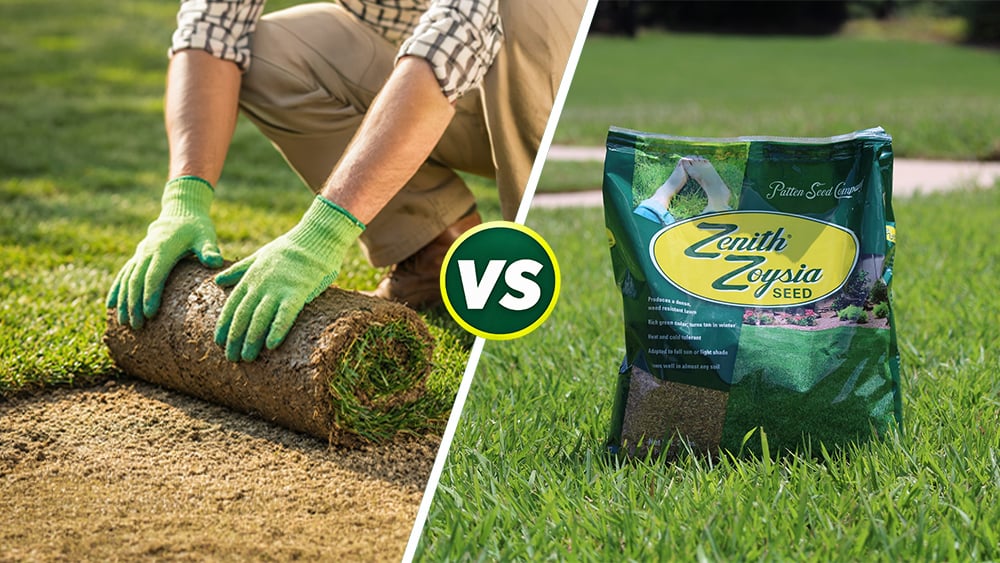

Are you staring at bare dirt and wondering how to grow a green lawn in the Southeast or Southwest heat?
You've got two main paths: lay fresh sod or plant grass seed.
Both will grow into a beautiful lawn, but sod offers instant gratification while seed requires patience. In this blog, I will explain how each method works differently depending on your timeline, budget, and local growing conditions so you can decide which method is best for your new lawn.
Here at Super-Sod, we grow and sell BOTH sod and seed that we grow on our own farms, so we'll walk you through the honest pros and cons of each method for lawns in the South, from Texas to the Carolinas.
We'll cover sod and seed climate fit, establishment speed, cost, maintenance expectations, and long-term lawn health. By the end, you'll know which starting method makes the most sense for your new yard.
Key Considerations: Sod vs Seed for Southern Lawns
Sod vs. Seed Differences:
- Speed: Sod offers instant gratification and mitigation of mud and dirt. Sod roots within a few weeks, requiring less time monitoring and watering to establish. Grass seed takes 2 to 4 months to fill in and handle foot traffic.
- Versatility: Sod is more versatile and can be used on flat and sloped lawns. Seed is best used on flat land so it doesn't wash away.
- Cost: Grass seed costs a fraction of sod per square foot, making it attractive for large, flat areas on a tight budget.
- Ease: Physically, soil preparation for sod and seed is the same. While it takes more endurance to lay sod, it's faster to establish. Spreading seed takes less physical effort, but it takes months of patient watering until it fills in.
- Availability: Warm-season grasses like Zenith Zoysia, TifBlair Centipede, and Common Bermuda are available as sod and seed; other warm-season grass types are sod only. The cool-season Elite Tall Fescue is available as sod and seed; other types are sod or seed only.
Sod vs. Seed Similarities:
- Versatility: Here at Super-Sod we offer Zenith Zoysia, TifBlair Centipede, and Elite Tall Fescue as both sod and seed so there are flexible establishment options.
- Availability: Super-Sod offers both farm-fresh certified sod and our own tested seed varieties bred specifically for warm climates.
- Best Results: Soil³ compost improves results with both sod or seed methods by building healthier soil from the start.
- Maintenance: Both sod and seed require the same maintenance once the lawn is established.
- End Results: Whether you grow a lawn from sod or seed, the result will be a beautiful, healthy lawn.
That's just an overview of what there is to know about the establishment of Southern lawns. I hope it raised some questions. Let's dig into the specifics of sod and seed, and if I don't answer everything, please ask your questions in the comment section at the bottom.
Sod vs Seed: Overview
What is Grass Sod?
On our social media accounts, we are often asked what exactly is sod and what "a pallet" means. So, let's start with that.
Sod is turfgrass we grow on our farm. Once it's mature, we harvest it in slabs or rolls and stack them on a pallet. A pallet is simply a stack of sod slabs or rolls on a literal wood pallet. For most of our sod types, one pallet covers 500 square feet.
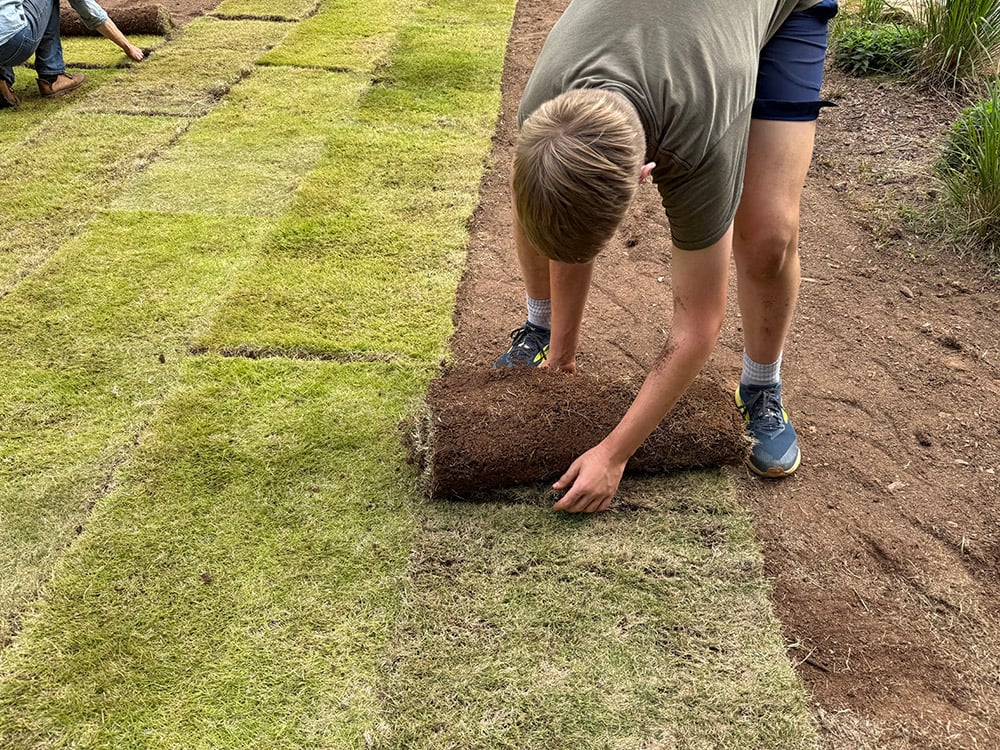
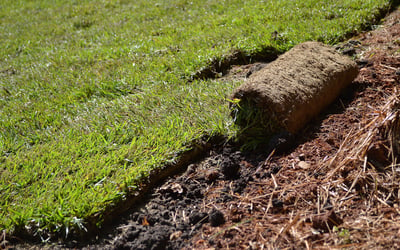
You lay the sod onto prepared soil, water it in, and you've got an instant lawn that covers mud and helps stop erosion. In 2 to 3 weeks, those roots anchor into the ground and the lawn is ready for normal use once the seams fill in and the new lawn as been mowed at least 3 times.
This picture gives you a quick visual of a sod pallet size and shows the wood pallet under the sod.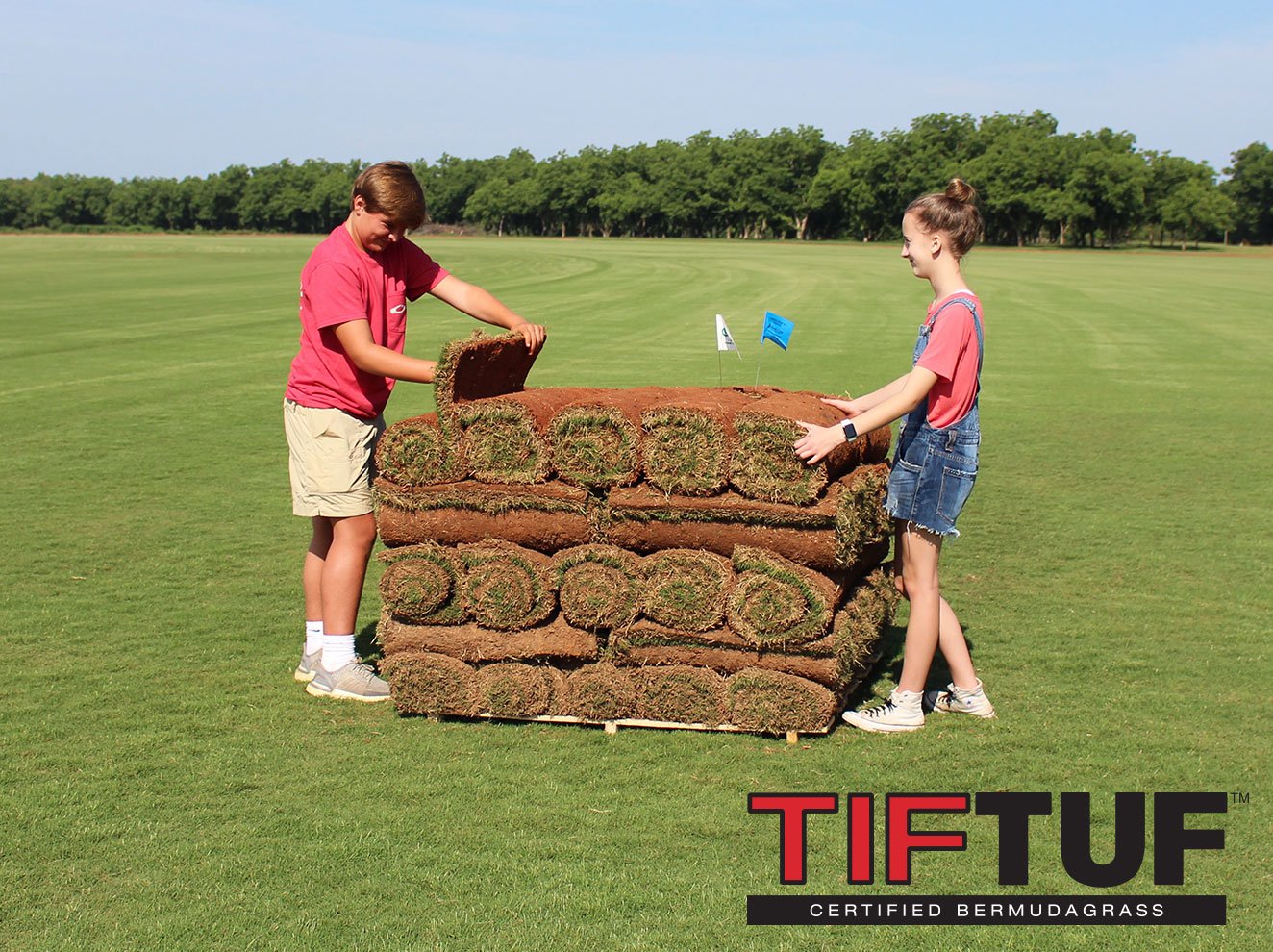
Sod Benefits
- Instant coverage: Your yard goes from bare soil to green lawn in a single day of installation.
- Immediate erosion control: The sod rolls or pieces (especially when staggered in a brick-like pattern) reduce the impact of rainwater and hold soil in place on slopes right away, without waiting for establishment and filling in.
- Minimal weed competition: Certified sod arrives nearly weed-free and leaves little room for weed seeds to germinate.
- Flexible installation timing: You can lay most warm-season sod year-round! The best for year-round installation is TifTuf Bermudagrass because it can be laid even when it's dormant. For the cool-season Tall Fescue, it's best laid in the cool months of September through May (sometimes later, depending on the weather). Just give us a call or stop by a Super-Sod store and we will answer all your questions about seasonal timing.
- Quick use for families and pets: Your lawn can handle foot traffic in just a few weeks after installation.
Sod Pros and Cons
Pros:
- Establishes in 2 to 3 weeks, so you're enjoying your yard before the season is over.
- Crowds out weeds from day one because there's no bare soil exposed.
- Works on slopes and hills where seed would wash away in a summer downpour.
Cons:
- Higher upfront material cost per square foot compared to seed, though the time savings often balance the investment.
- Sod needs to be laid in 24 to 48 hours of harvest for the healthiest results, so plan your delivery day carefully.
- Variety selection depends on what your local farm grows, though Super-Sod's lineup covers the most popular Southern grasses including TifTuf Bermuda, Zeon Zoysia, and TifBlair Centipede.
When to Choose Sod Instead of Grass Seed
Personally, I advise people to choose sod over seed in these conditions:
- Lay sod when there is mud surrounding a building entrance and you need to quickly address mud entering a building;
- Lay sod when erosion is a concern on a slope (even small slopes can be problematic for seed);
- Lay sod when you need a quick upgrade for curb appeal;
- Lay sod when you have a small area that needs grass - we sell individual sod pieces and rolls for that reason;
- Lay sod when you cannot attend to the high maintenance required to start new grass from seed;
- Lay sod when you need a certificate of occupancy to quickly move into a building.
What is Grass Seed?
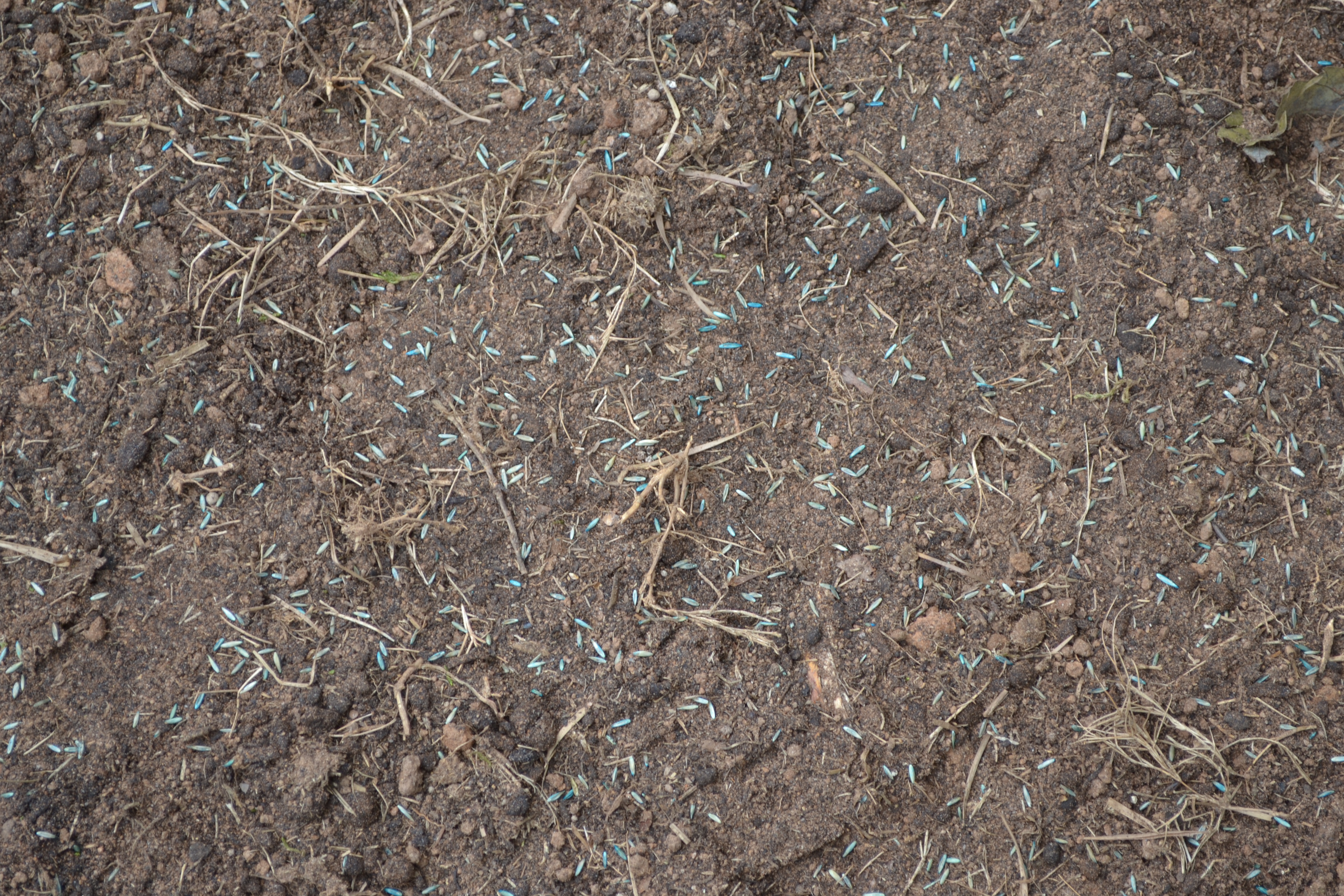
Grass seed is exactly what it sounds like: harvested seeds from specific turfgrass varieties that you spread across prepared soil and then water a lot for it to germinate.
Once exposed to light and water, the grass seeds germinate, sprout, and gradually fill in to form a lawn over several weeks to months. Seeding puts you in the grower's seat, and the results depend heavily on planting timing, soil prep, and watering consistency.
Grass Seed Benefits
- Lower upfront cost: Seed runs a fraction of what sod costs per square foot, which adds up on larger properties.
- Deeper root development: Because grass germinates directly in your soil, roots grow undisturbed from the start.
- Variety flexibility: You can choose specific cultivars matched to your yard's sun exposure, soil type, and water availability.
- Easy for small areas: Patching thin spots or filling in around new landscaping is straightforward with seed and a spreader.
- DIY-friendly process: You need a rake, a spreader, and patience. No heavy lifting required.
Seed Pros and Cons
Pros:
- Budget-friendly for covering large areas where sod costs could climb quickly.
- Lets you select cultivars for specific conditions (shade-tolerant Zoysia, drought-hardy Bermuda, or low-input Centipede).
- Roots establish in your native soil from day one, building a resilient root system over time.
Cons:
- Warm-season grass seed must be planted in late spring to early summer when soil temperatures stay above 65°F. Miss the window and you'll wait until next year.
- New seedlings need 2 to 3 waterings per day for the first 3 to 4 weeks, plus continued attention for several more weeks after that.
- Bare soil during establishment invites weed competition, and you can't apply most herbicides until grass matures.
Sod vs Seed: In-Depth Comparison
Climate fit for Southern yards
Southern summers bring heat, humidity, and unpredictable afternoon storms. Sod handles these conditions well because the grass is already mature and rooted when it arrives. You're not asking tiny seedlings to survive a 95°F day with 80% humidity.
Seed can work, but your planting window is tight. Most warm-season seeds germinate when soil temperatures are between 65°F and 70°F, which means late April through June in much of the Southeast. If you're starting a Zenith Zoysia lawn from seed, timing matters even more because Zoysia germinates slowly compared to Bermuda.
Speed of establishment
Sod turns bare soil into a usable lawn in about 2 to 3 weeks. That's a big deal if you've just finished a construction project or want your yard ready before a family event. You'll still need to water diligently during that rooting period, but the visual result is immediate.
Seed takes significantly longer. Bermudagrass seed can germinate in 7 to 14 days under good conditions, but the lawn won't be ready for regular foot traffic for 2 to 4 months. Zoysia from seed is even slower, often needing a full growing season to fill in completely.
Cost and budget
Seed wins on upfront price. Grass seed costs a few cents per square foot, while sod typically runs significantly more. For a large yard, that difference adds up fast. However, the total cost picture includes more than material price alone.
Sod's higher upfront investment often pays back through fewer weed treatments, less reseeding, and faster use of your yard. When you factor in the time and water a seeded lawn demands during establishment, the gap narrows. Super-Sod's Bad Spot Eraser kits also make small sod repairs simple and affordable.
Maintenance during establishment
Both methods need consistent watering during establishment. Sod requires daily soaking for the first 2 weeks, then gradually tapering to deeper, less frequent watering as roots take hold. It's a focused effort, but a short one.
Seed demands even more vigilance. Those tiny sprouts dry out fast in Southern heat, so you'll need to water lightly 2 to 3 times a day for 3 to 4 weeks, then continue careful irrigation for another month or more. Top-dressing with Soil3 compost instead of traditional mulch helps hold moisture around seeds and feeds the soil at the same time.
Long-term lawn success
Both sod and seed can give you a healthy, long-lasting lawn if you choose the right grass type for your conditions and follow good maintenance practices. The grass itself doesn't care how it got there once it's established. A seeded Bermuda lawn and a sodded Bermuda lawn will perform the same once roots mature.
Where sod has an edge is risk. Fewer things can go wrong. A heavy rain won't wash away your investment, birds won't eat it, and weeds have a much harder time competing against a thick mat of established turf. If you want the lowest-risk path to a reliable Southern lawn, sod is the safer bet.
Grass variety selection
Most warm-season sod varieties grown for Southern lawns are vegetatively propagated, meaning they're grown from sprigs and plugs rather than seed. That includes popular options like TifTuf Bermuda and Zeon Zoysia, which are only available as sod. You won't find seed for these improved cultivars at any garden center.
Seeded options for the South include Zenith Zoysia, TifBlair Centipede, and common Bermudagrass varieties. Super-Sod grows both the seed and the sod from these same cultivated varieties on our own farms, so you know the genetics are consistent regardless of which method you choose.
Warm-Season Sod vs Seed - At a Glance
Note: The following warm-season grass varieties are spreaders that fill in via stolons/runners.
|
Warm-Season Lawns from Seed |
Sod | Seed |
| Speed | Roots in 2-3 weeks | Germinates in 2-3 weeks; full growing season to fill in |
| Erosion Control | Immediate; especially when staggered like bricks | Best when runners fill in; some control when roots first form |
| Weed Resistance | High from day one | Low until fills in |
| Planting Window | All year | Spring & summer only |
| Variety Options | Many options like TifTuf Bermuda, Zenith Zoysia, TifBlair Centipede | Common Bermuda, Zenith Zoysia, TifBlair Centipede |
| Watering Commitment | Medium: Keep wet until rooted, then taper | High: Keep moist until germination, then taper |
Cool-Season Sod vs Seed - At a Glance
Note: The following cool-season grass varieties are clumpers that don't spread.
|
Cool-Season Lawns from Seed |
Sod | Seed |
| Speed | Roots in 2-3 weeks | Germinates in 2 weeks; 3-4 months to fill in |
| Erosion Control | Immediate; especially when staggered like bricks | Some control when roots first form; control within 3-4 months |
| Weed Resistance | High from day one | Low until clumps fill in |
| Planting Window | The cool months from September to May | Fall & winter only; ideally in September to October |
| Variety Options | Elite Tall Fescue sod | Elite Tall Fescue seed |
| Watering Commitment | Medium: Keep wet until rooted, then taper | High: Keep moist until germination, then taper |
Why Super-Sod is the Best Source for Sod and Seed
Super-Sod grows both sod and grass seed on our own farms across Georgia, South Carolina, North Carolina, Florida, Tennessee, and Texas. That vertical integration means your sod is harvested fresh and delivered directly to your property. When you order sod from Super-Sod, you're getting turf that's been raised in the same Southern climate where it'll live in your yard.
For homeowners who prefer seeding, Super-Sod's Zenith Zoysia and TifBlair Centipede seed are grown, cleaned, and bagged at our Patten Seed facilities in Georgia. That means the seed and sod come from the same cultivated varieties. Our Elite Tall Fescue seed blend is assessed yearly for the best types for Southern heat and humidity.
No matter which method you choose, preparing your soil with Soil³ compost (our organic compost) gives your lawn the healthiest possible start. Good soil is the foundation of every great lawn, and that's true for sod and seed alike.
FAQ: Sod vs Seed for Southern Lawns
Is sod or seed better for hot Southern summers?
Lawns grown from either sod or seed adapt and thrive in hot, humid southern summers. Timing is important: cool-season turf like Elite Tall Fescue sod or seed should be planted in the cool months and given time to establish before the heat of summer. Warm-season sod can be laid all year long; while warm-season seed is best planted during the growing months of spring and summer before fall frosts.
Can I seed a Bermuda lawn in the South?
Yes, common Bermudagrass varieties grow well from seed in the South. Plant when soil temperatures are consistently above 65°F (usually May through June). However, improved varieties like TifTuf Bermuda are only available as sod from growers like Super-Sod.
How long does sod take to root in Southern soil?
Most warm-season sod roots into Southern soil in about 2 to 3 weeks when watered properly, meaning it needs to be kept moist until it roots. You can test rooting by gently tugging a corner. If it resists, roots are tacked down (another way of saying "rooted in") and you can taper off watering.
Does Super-Sod sell both sod and grass seed?
Yes. Super-Sod grows sod on our farms and produces Zenith Zoysia and TifBlair Centipede seeds. Both products come from the same cultivated varieties, so quality is consistent no matter which method you pick.
Should I use compost when laying sod or planting seed?
Absolutely. Amending clay or sand soils with compost balances moisture, adds natural nutrients, and builds healthier soil structure. Super-Sod's Soil3 compost is OMRI-listed for organic gardening and works well as a soil amendment for both sod and seed projects.
What's the best grass type for a shady Southern yard?
Zeon Zoysia sod is one of the most shade-tolerant warm-season grasses available. It handles partial shade (4 to 6 hours of sun) better than Bermuda, which needs full sun. If you want to seed a shady area, Zenith Zoysia seed is a solid option, though it takes longer to fill in.
Can I combine sod and seed on the same property?
This is actually a common approach. Many homeowners sod the front yard for instant curb appeal and seed the backyard to keep costs down. As long as you match the grass types or choose compatible varieties, both areas will blend together once they're established.
Questions? Leave a comment below. If you're ready to start your lawn project, visit your nearest Super-Sod location or order online for delivery straight to your door.